
Weeds to Wildflowers
In 2020, I began an exploration that had intrigued me since I moved back to the family homestead in upstate New York.
Every spring throughout my childhood, my mom and I would pull every weed in the vegetable garden in preparation for planting. We would always have a beautiful garden, bordered by bee balm, chicory and a milkweed or two.
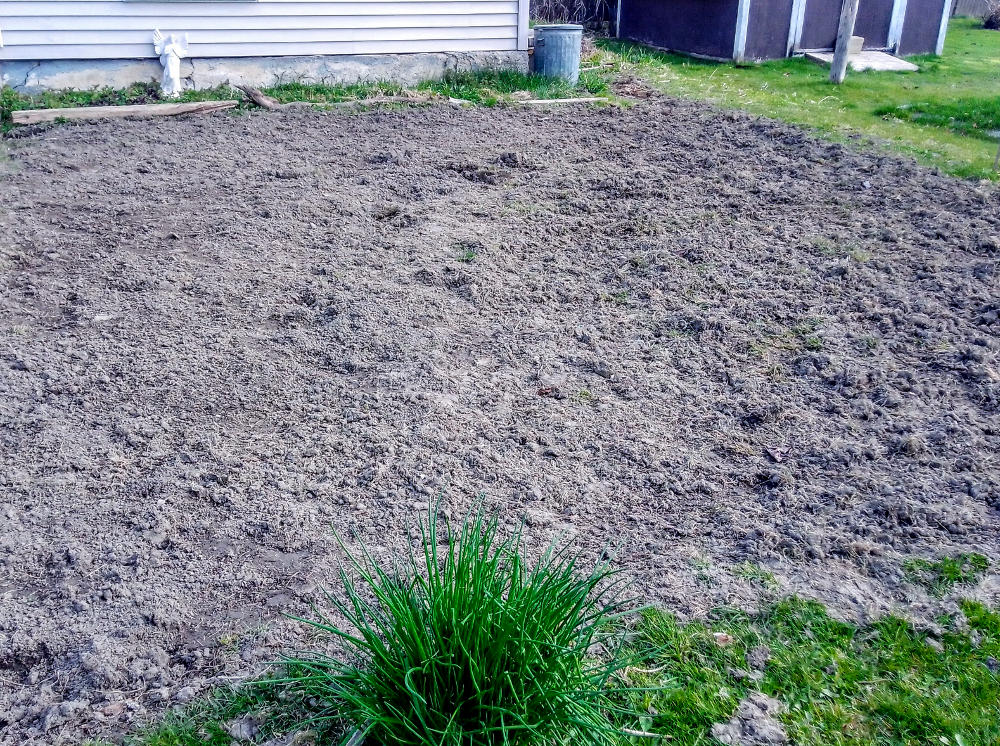
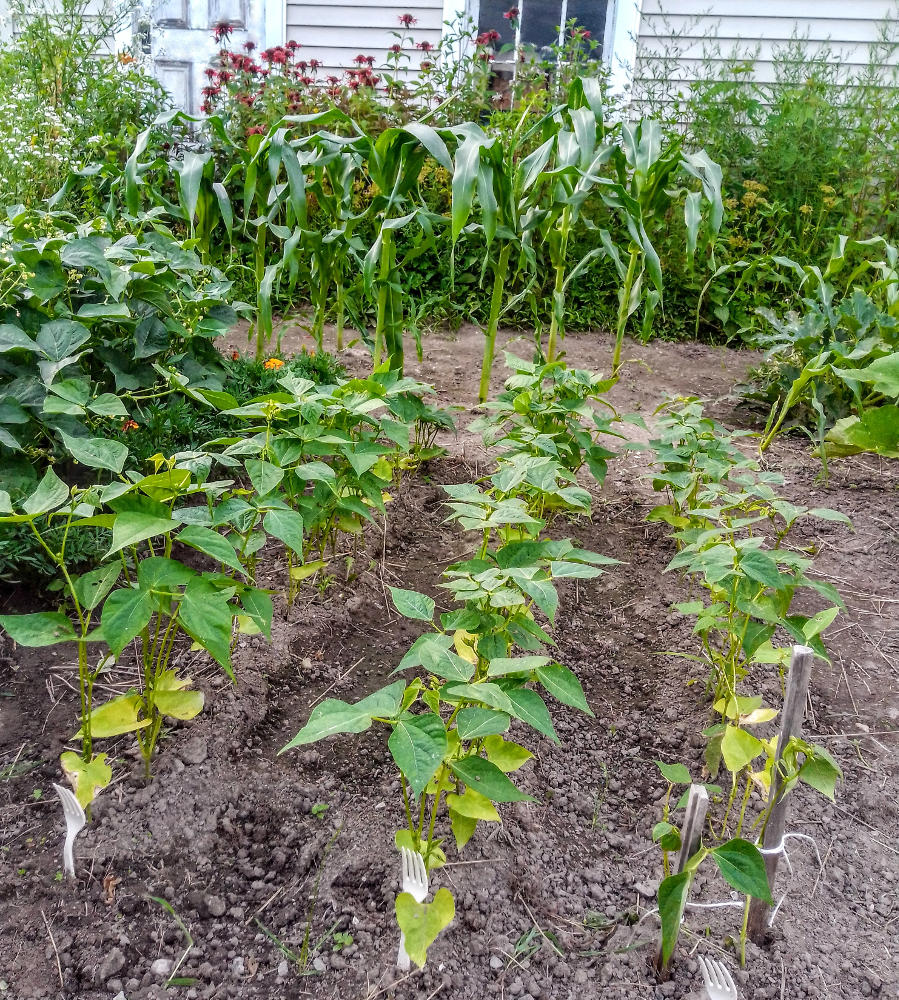
I was always curious about those weeds. What were they, really? Could some of them be wildflowers?
When I returned to the homestead after years of traveling and tending many gardens, I once again knelt in the garden of my childhood to pull weeds. The question of what they were came back to me. I stopped weeding, stood up and decided to let them grow.
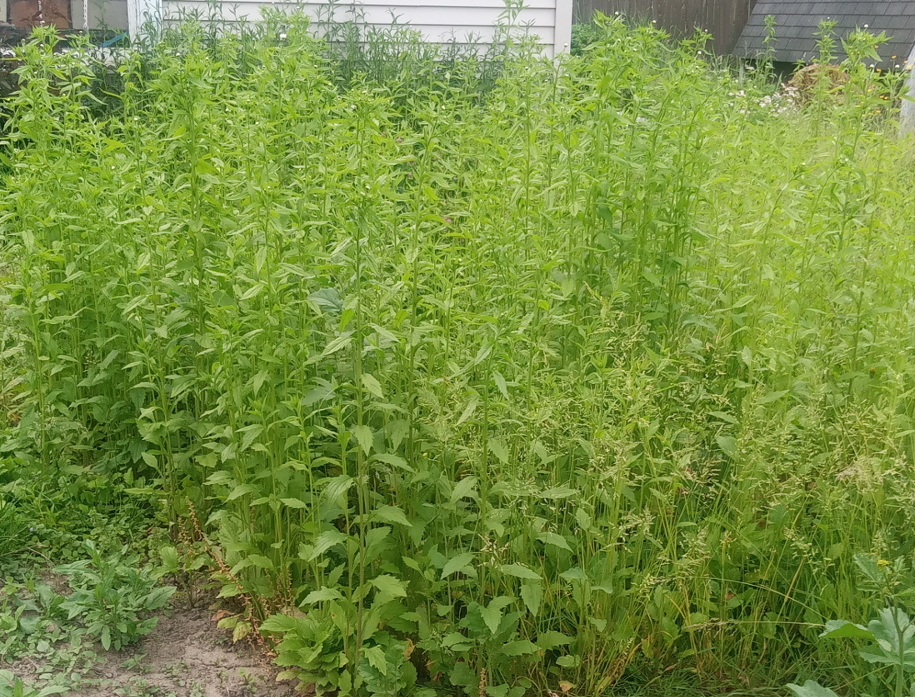
By summer the garden had become a wild field of fleabane, red clover, apple mint, wood asters, brown-eyed Susans and more.
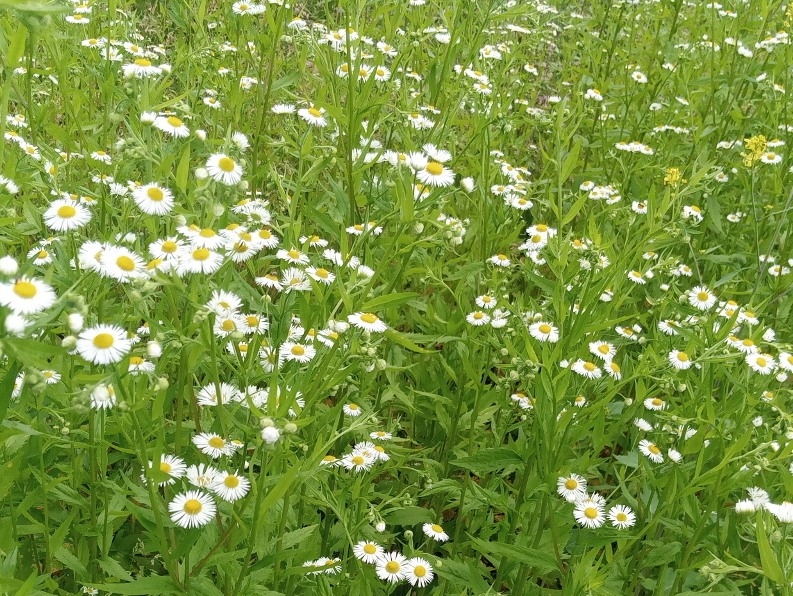
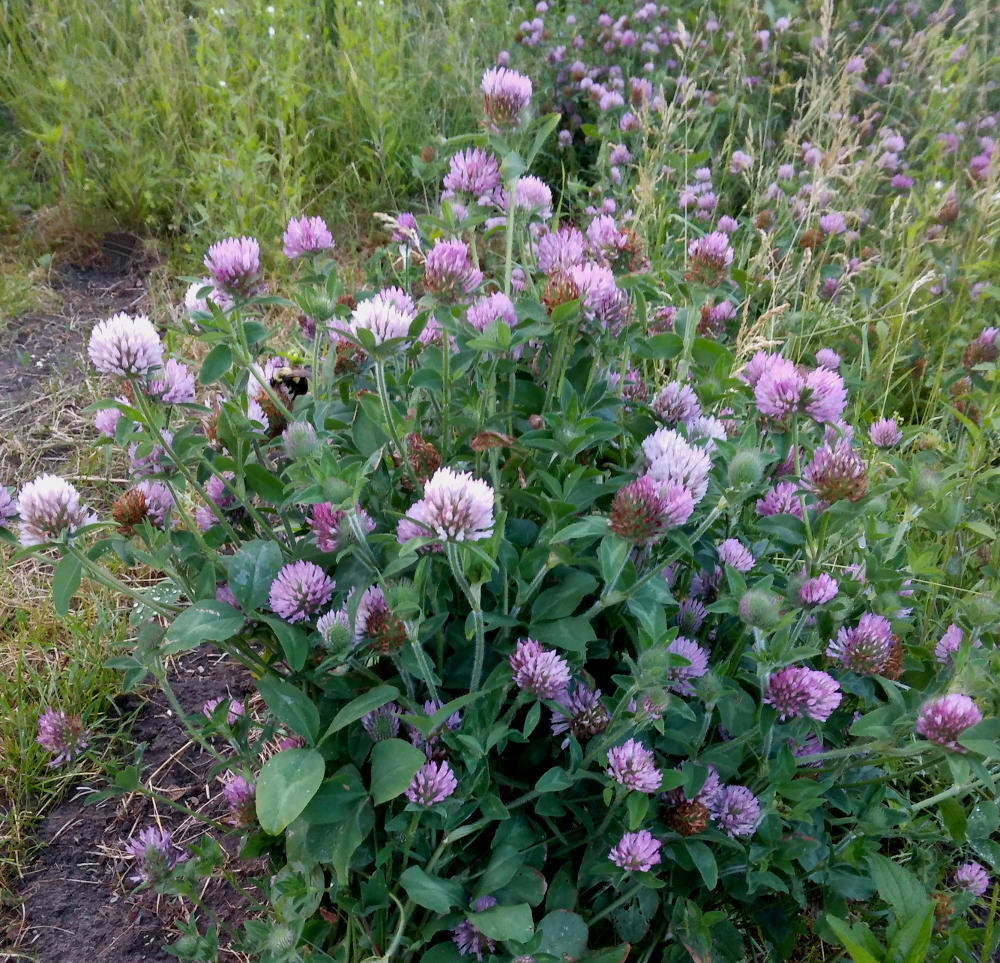
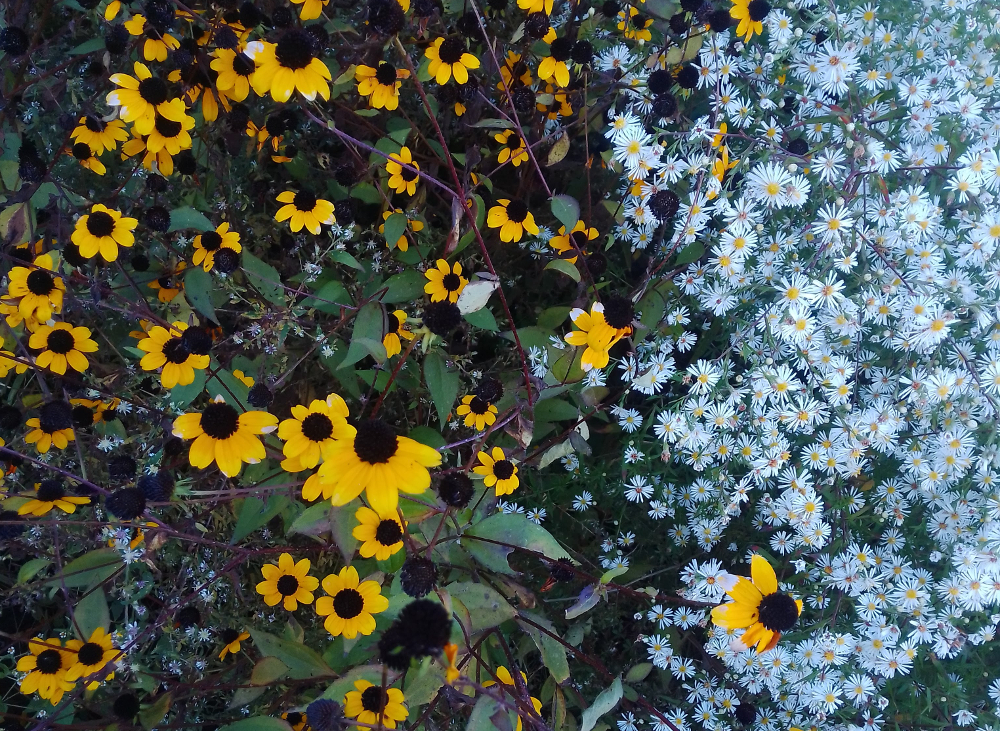
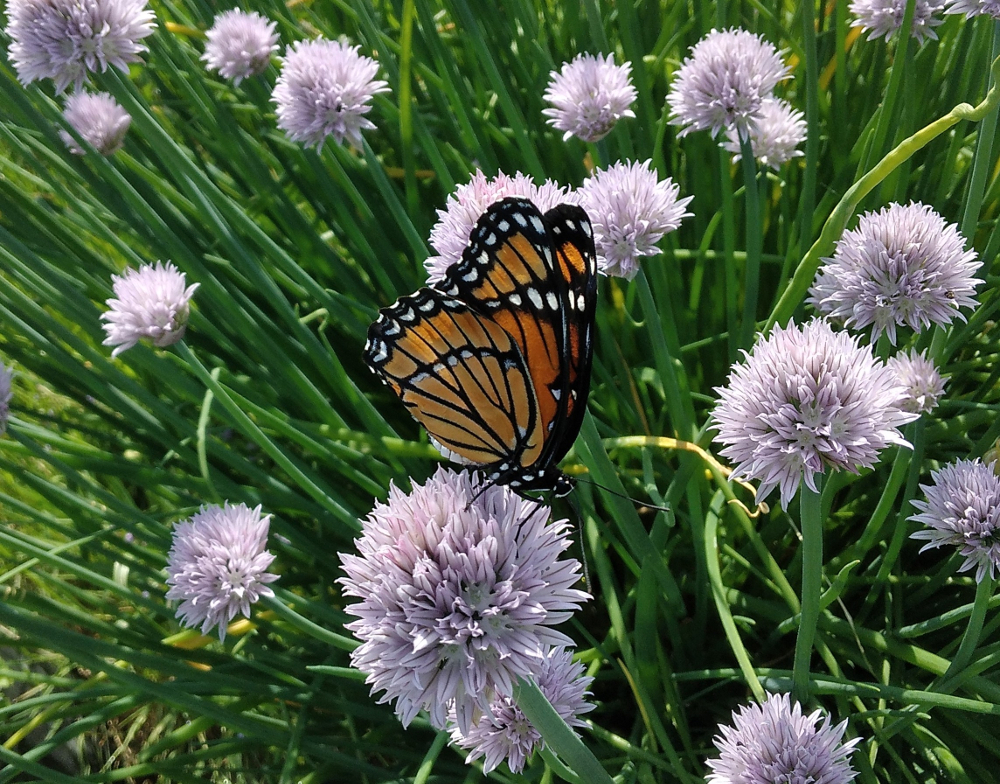
I also noticed an abundance of bees, dragonflies and butterflies returning to the garden – some of which I hadn’t seen since childhood.
Expanding Beyond the Garden
As I continued to discover more plants, I consulted with the online community of naturalists at iNaturalist to help identify each new species, chronicling my discoveries and their history along with personal stories behind each plant.
My curiosity eventually expanded beyond the vegetable garden area: I decided to explore ALL the plants on the property by allowing sections of the yard to grow wild.
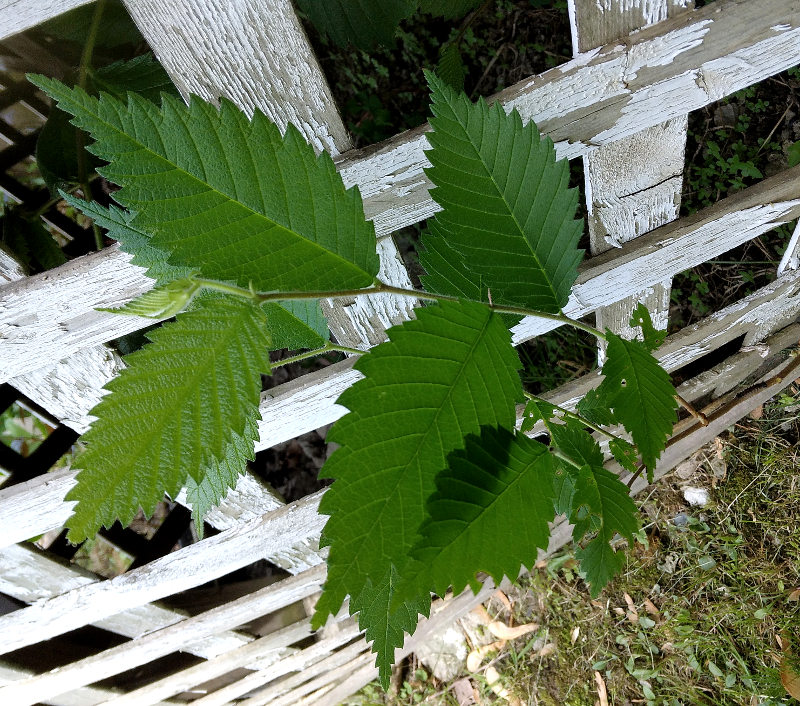
I discovered an elm tree growing underneath the porch (that my mother repeatedly tried to remove).
The surprise appearance of field pennycress became part of a national research project on biodiesel fuel with the U.S. Department of Agriculture.
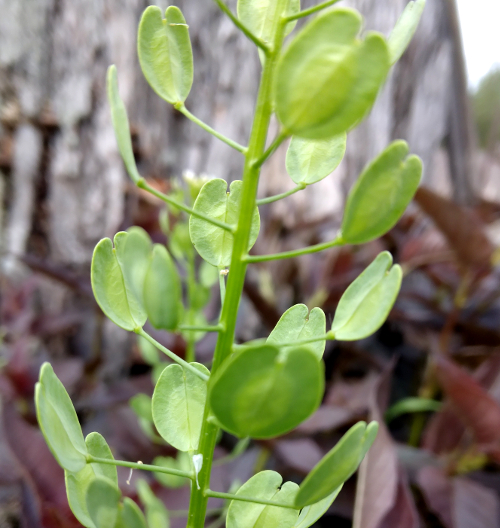
As I learned about the native and non-native (invasive) properties of each plant, I decided to commit to transforming the entire yard into a biodynamic eco-garden. The Eco-Garden Project was born. To date, the inventory has reached well over 70 plant species.
Deepening the Research: Eco-Sculpture & Culinary Experiments
As an artist, I didn’t stop at the science of identifying plants, I started asking, “What can I create from what’s growing right under my feet?”
My initial discoveries prompted a summer of winemaking using only the plants foraged from my backyard: dandelion, clover, apple mint and even cultivated tomatoes.

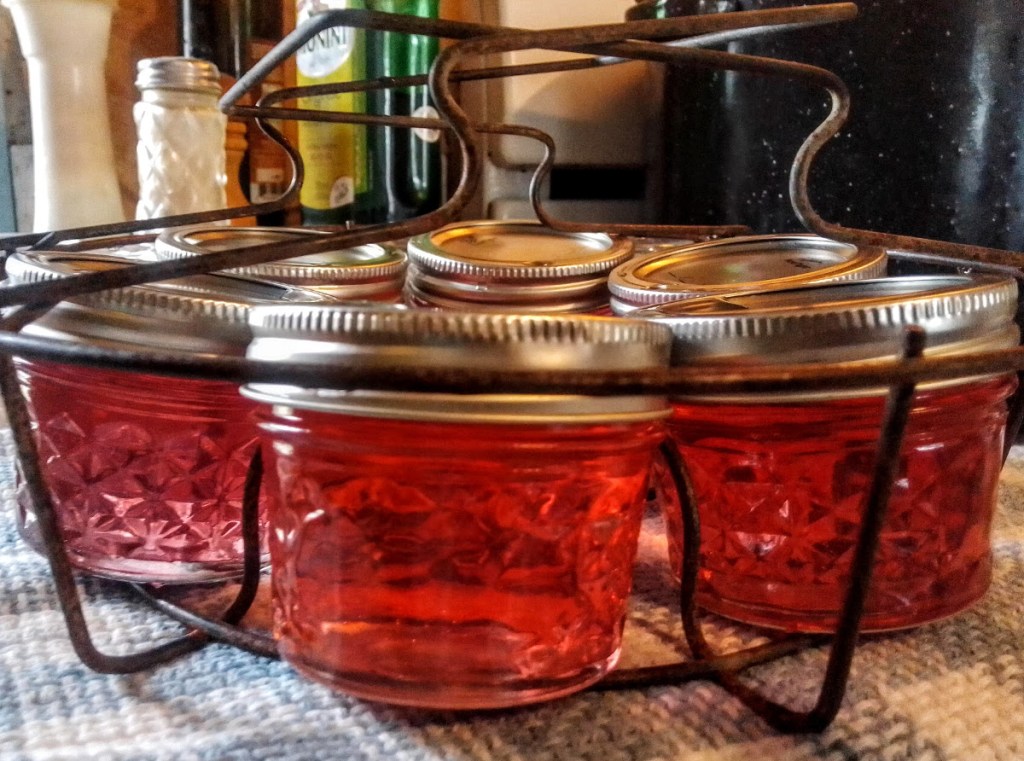
I also began making homemade jelly from roses, apple mint and other foraged plants.
Next, I turned my focus to art, creating eco-sculptures and installations from each of the discovered species.
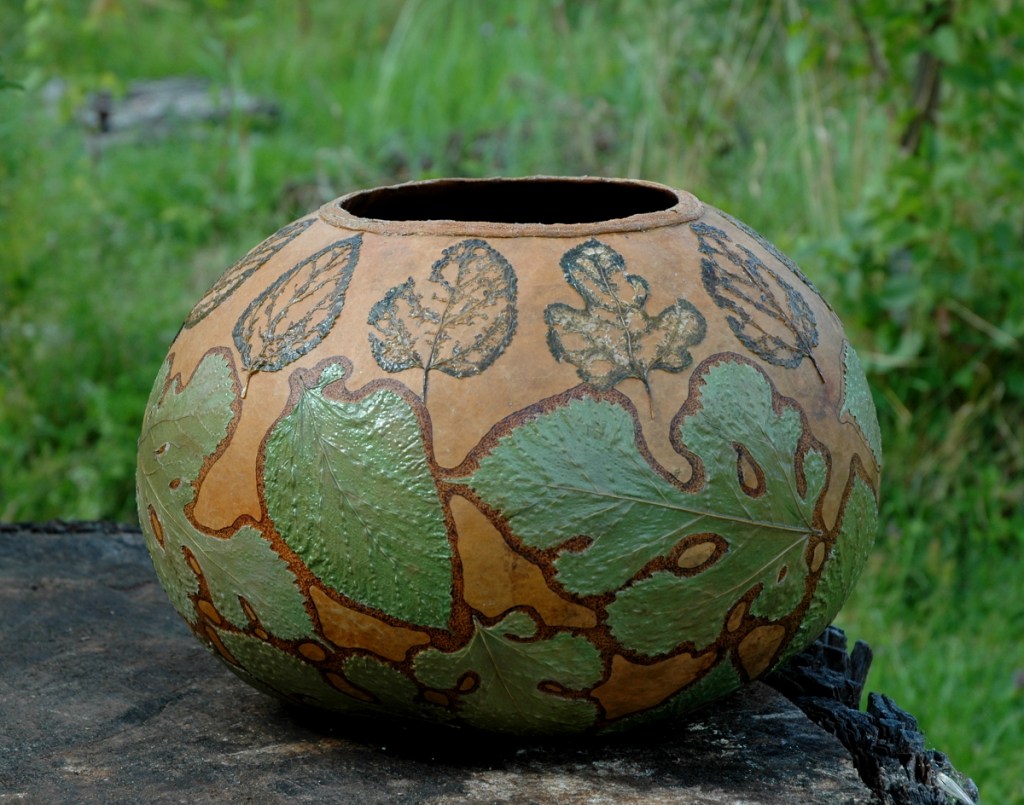
Some pieces reflect the science and the “spirit” of the plant using foraged materials integrated into an Earthpod – a series that has been a hallmark of my gourdwork.
Other sculptures are larger, more contemporary mixed media pieces that reflect the plant’s provenance and history, its interactions with animals and insects and/or deeper insights into its relationship with humans and symbolic life lessons as well as environmental concerns.
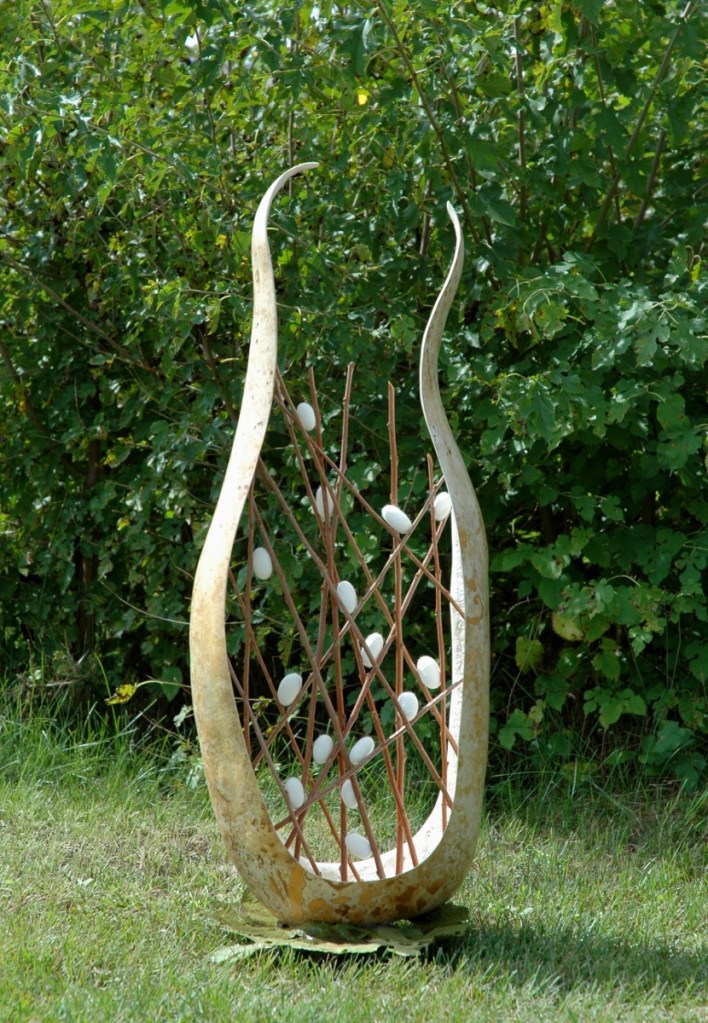
Click below to view Eco-Sculptures created to date in conjunction with the Eco-Garden Project:

Click below to view a FULL portfolio of all artwork:
Installations and Community-Building
The abundance of wildflowers inspired the construction of a Flower Wall installation as a natural “fence” along my property line which became a “stone soup” of native plants donated from friends and neighbors.
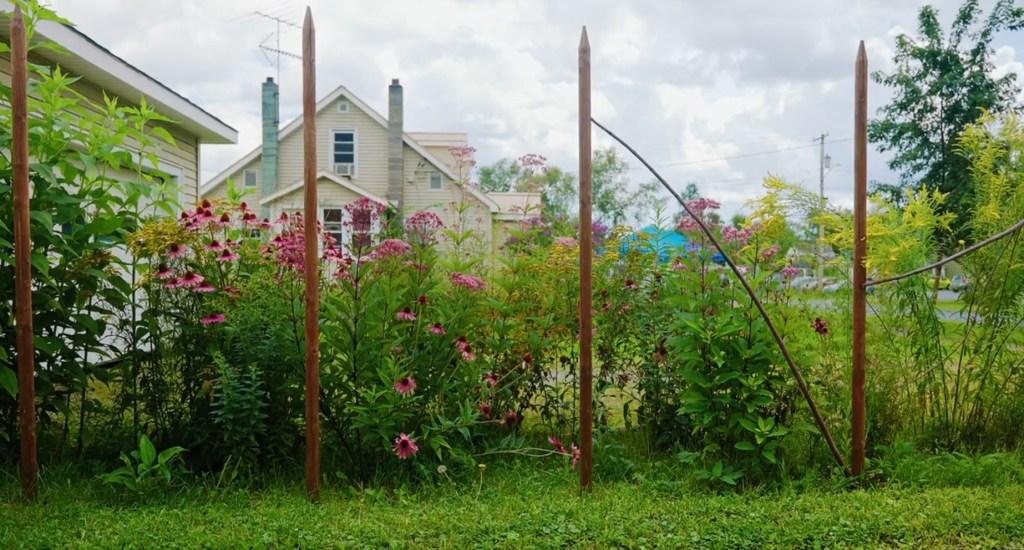
As I began adding more exterior installations on the property, the curiosity invited questions from neighbors and passers-by. Soon, they were engaging with me on a regular basis, sharing stories of their rewilding experiments and the “plants underneath their feet” in their own backyards.
Story-Boxes: Sharing Research, Expanding Community
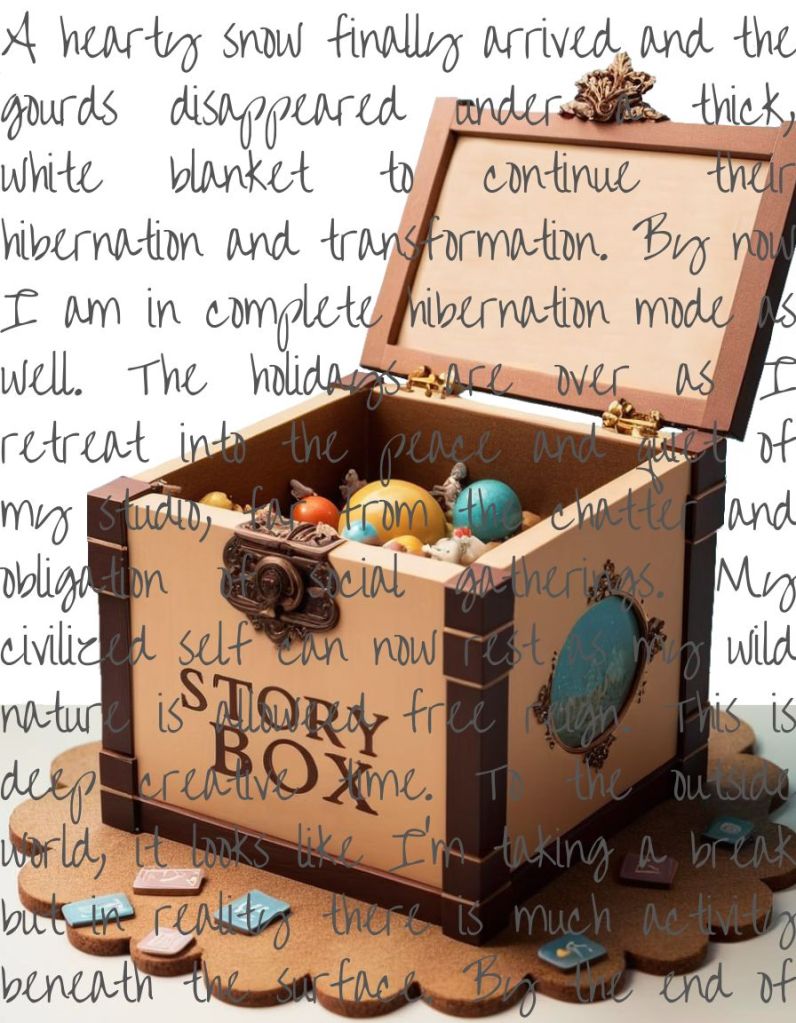
Storytelling was incorporated into The Eco-Garden Project initially for documenting each species discovered on the property. The stories eventually grew into the development of online Story-Boxes for each of the plant discoveries, chronicling the science and the history of the plants as well as the entire creative process of the artwork, with insights gathered from the process. Stories shared through online articles and social media expanded the project’s reach and provided a platform for virtual engagement and interaction.
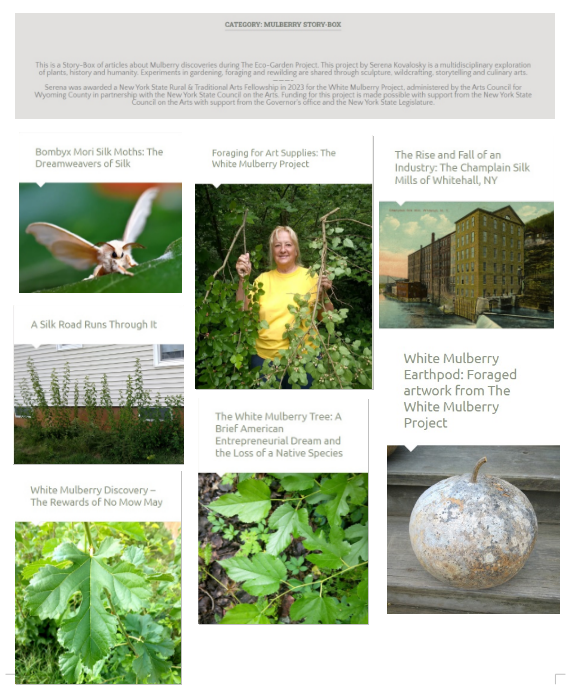
Click below to read all articles in the Eco-Garden Story-Box:

A $10,000 Grant and a Project Launch
In 2023, I was awarded a $10,000 New York State Rural and Traditional Arts Fellowship which allowed me to explore how I could combine science, art, storytelling, environmentalism, culinary experiments and community engagement together in a single project. The White Mulberry Project: A Silk Road Runs Through It provided a full “mulberry experience” online, culminating in an outdoor public exhibition and installation on the Eco-Garden grounds in August 2023.

The exploratory project provided a path towards presenting contemporary issues and inspiring solutions through the symbolism of plants.
“If you want to make a change in the world, start in your own backyard and listen to the plants under your feet.”

What’s Next….
The Eco-Garden Project continues to grow and evolve. Serena Kovalosky is bringing a new project to the museum realm in 2024 as an Artist-in-Residence at the Slate Valley Museum in Granville, NY.

SUBSCRIBE and follow the journey….
 Serena Kovalosky